Litter does not appear on its own. It is the result of human behaviour, but also of the environment in which that behaviour takes place. Anyone who wants to truly understand the problem has to look beyond the waste that is left on streets, in parks or in nature.
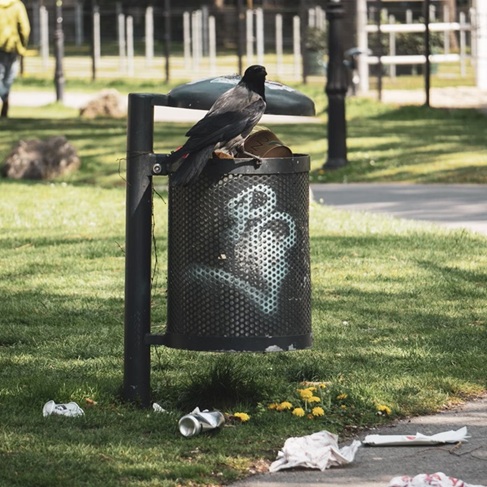
The problem is bigger than just an overflowing bin
Litter is, of course, related to waste that does not end up in a bin. But that is not the whole story. The way waste is collected, how visible and accessible bins are, how quickly they fill up and what social habits exist in a certain environment all play a role.
International reports also show that the problem cannot simply be reduced to one single cause. The World Bank states that higher-income countries produce more waste per person on average than lower-income countries. At the same time, international reports from the Organisation for Economic Co-operation and Development (OECD) and the United Nations Environment Programme (UNEP) stress that waste in the environment is closely linked to the way waste is collected, processed and managed.
Producing more waste does not automatically mean more litter
It is tempting to think that countries producing more waste automatically cause more litter. It is not that simple. Wealthier countries often produce more waste per person, but that does not say everything about what eventually ends up on the street, in green spaces or in the water. The quality of waste collection, the presence of infrastructure, policy and enforcement also play a major role.
The OECD even identifies mismanaged plastic waste as the main source of macroplastic leakage into the environment.. In 2019, 22 million tonnes of plastic leaked into the environment worldwide, most of it in the form of larger plastic items and packaging waste.
It is also about behaviour
Litter is therefore not only a technical or logistical problem, but also a behavioural one. People throw something away, hold on to it, look for a bin or choose not to. That is why habits, convenience, visibility and social norms all matter.
Research shows that the environment influences this behaviour. A study from Sweden, for example, looked at the effect of the appearance and signals of street bins and concluded that social norms and the way a bin presents itself can influence how much waste ends up inside it. The major American Keep America Beautiful 2020 National Litter Study also shows that litter is not only about waste itself, but also about behaviour, perception and the public space in which that behaviour takes place.
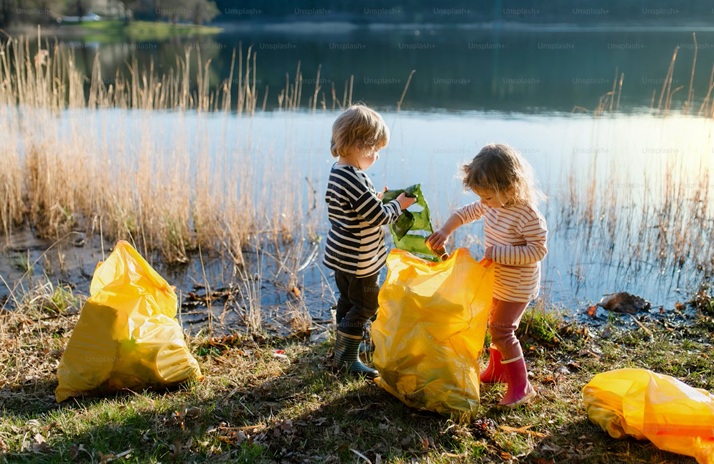
Fines and cleaning are important, but not enough
Enforcement, cleaning and clear rules remain important. But stricter enforcement alone usually does not solve the problem completely. Anyone who wants to reduce litter in a lasting way must also ask why people leave waste on the street or in nature, and how that behaviour can change over time.
That is exactly why visibility, ease of use and social norms matter. When waste solutions are clearly present, stand out and can be used in a logical way, correct behaviour becomes easier. Research into leaving litter behind also shows that this behaviour is linked not only to sanctions, but also to context, signals from the environment and what people see as normal.
Why education and upbringing matter so much
If litter is partly a behavioural problem, then education is a logical part of the solution. Anyone who teaches children from an early age that waste does not belong on streets, in parks or in nature lays the foundation for different behaviour later in life.
That does not mean education is the only solution. Waste management, public cleanliness, enough facilities and enforcement all remain necessary. But upbringing and education contribute something that may be even more important in the long term: a generation for whom throwing waste away properly becomes more natural.
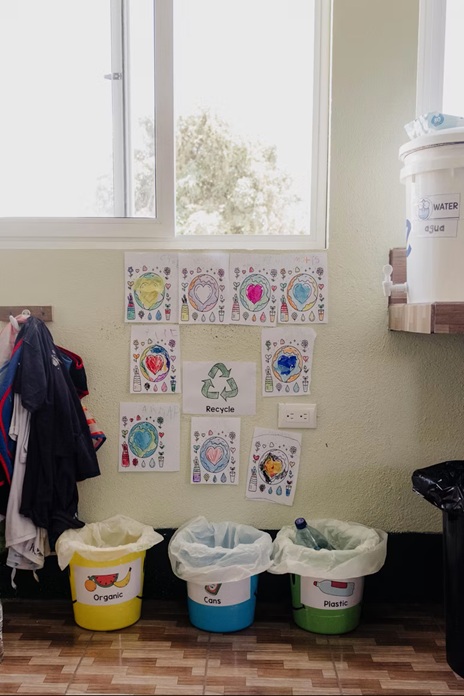
Playbin
That is the thinking behind the Playbin. It was developed not only as a waste station, but also as a way to make waste collection more visible and more appealing, especially for children.
The playful and visible element within the Playbin is meant as a positive trigger. The idea is simple: if children become familiar with waste collection in public spaces in an accessible way, it no longer remains an abstract rule, but becomes something they see, understand and remember. In this way, the Playbin fits within a broader approach that is not only about collecting waste, but also about behaviour, education and awareness.
Selected sources and further reading
World Bank – What a Waste 2.0: A Global Snapshot of Solid Waste Management to 2050
Keep America Beautiful – 2020 National Litter Study: Summary Report
External sources may change or be removed over time.